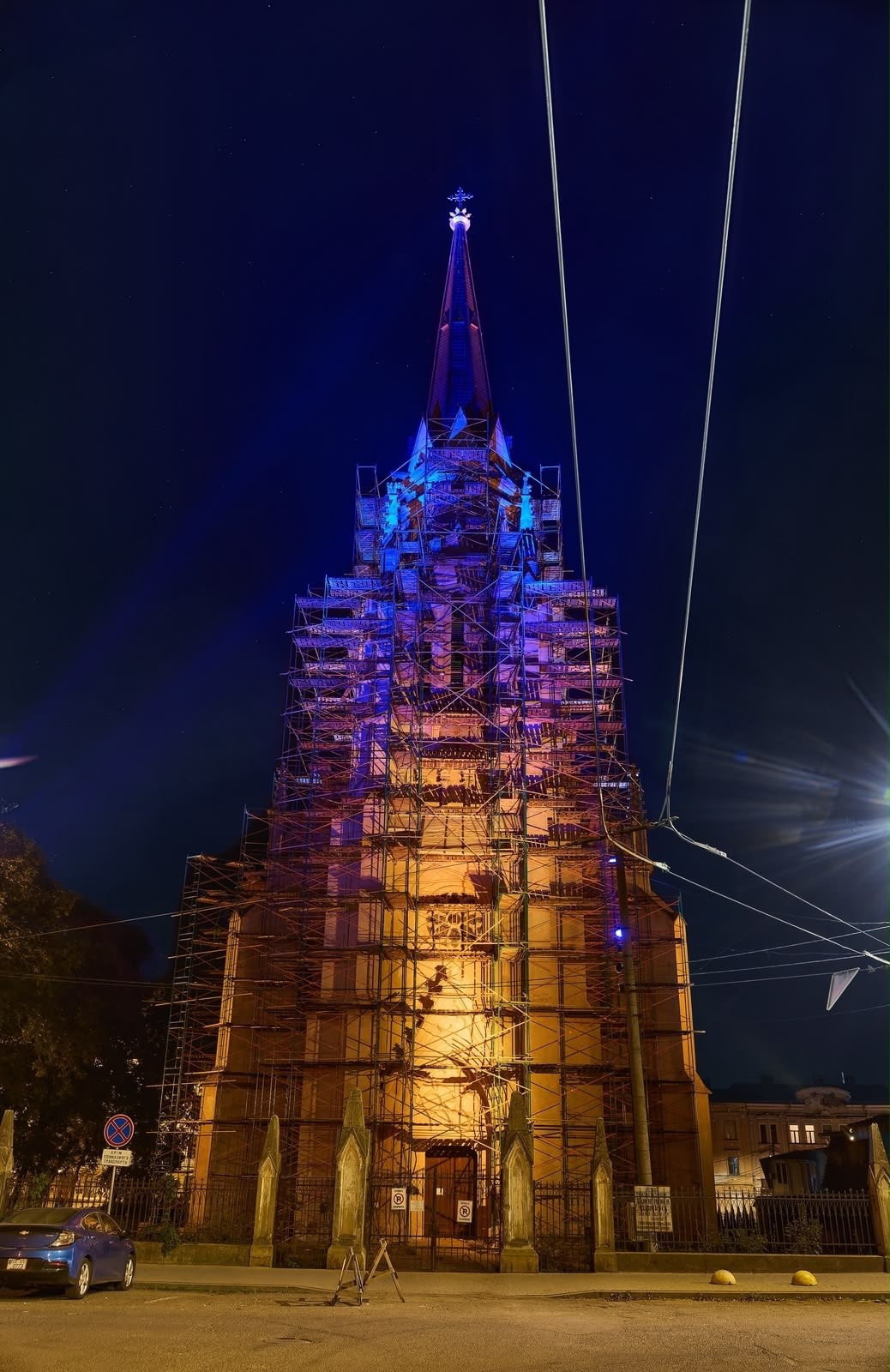
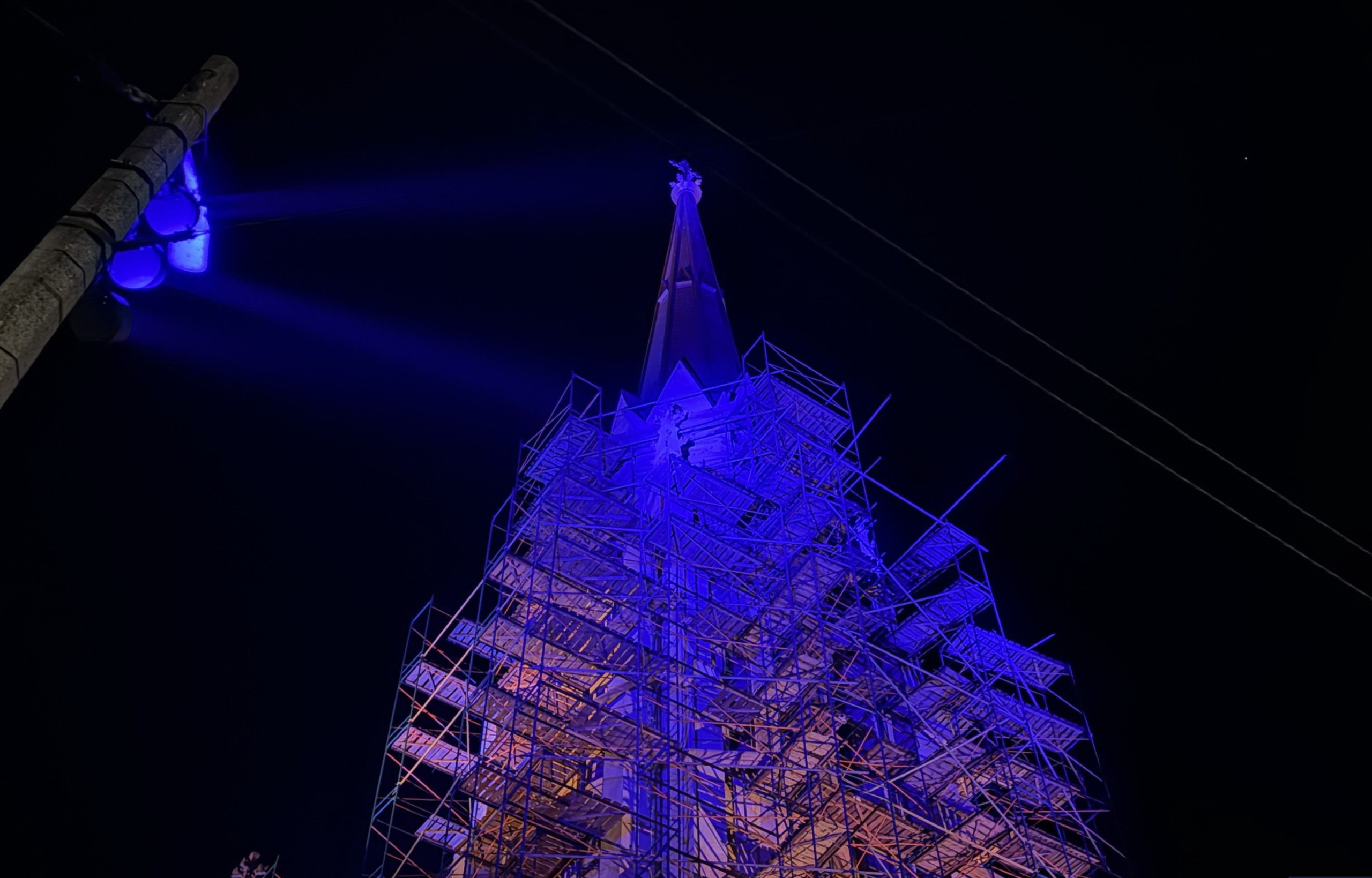
To mark the 618th anniversary of Chernivtsi, one of the city’s historic landmarks — the Church of the Most Sacred Heart of Jesus — received new architectural lighting. The project was implemented with the financial support of Intergal-Bud, a development company acting as a patron of the initiative. The lighting concept was designed and implemented by Expolight, a company specializing in architectural lighting.
Special lighting fixtures were created specifically for the church, taking its architectural features into account. The lighting composition changes from sunset into the night, highlighting the distinctive elements of the building and revealing its architecture from a new perspective.
Unlike temporary festive installations, the new architectural lighting is permanent. It will switch on automatically at dusk and remain on until midnight.
“We believe that a company’s responsibility extends beyond its core business activities. Intergal-Bud consistently supports social initiatives that help preserve cultural heritage. It is important for us to contribute to projects that make cities more comfortable, preserve their unique identity, and create value for people. As a construction company, this is also an opportunity for us to contribute to the preservation of architectural heritage and the development of an urban environment that matters to both residents and visitors of Chernivtsi,” said Tetiana Donkohlova, Director of Marketing Communications at Intergal-Bud.
The Church of the Most Sacred Heart of Jesus was consecrated on October 25, 1894. The church and the adjacent monastery were designed by Josef Leitzner, director of the Imperial-Royal Industrial School in Chernivtsi.
The church remained active even during the early years of Soviet rule, but it was closed in the late 1950s. In 1960, the building was converted into an archive. It was returned to the religious community only in 2010. After that, work gradually began to clear the premises of debris and unnecessary structures and to restore the church.



.jpg&w=3840&q=89)
.jpg&w=3840&q=89)
.jpg&w=3840&q=89)